
Concrete Slab Lowering: Retaining Existing Structures to Reduce Carbon and Disruption
Lessons from the Brunswick Centre Hotel redevelopment, where Heyne Tillett Steel's structural retention strategy was transformed into a buildable construction solution by Cambell Brown Engineers and successfully delivered by Getjar Special Projects.
Redevelopment projects often begin with a simple assumption: if a structure is in the wrong place, demolish it and build a new one. At the Brunswick Centre Hotel redevelopment in central London, the project team took a different approach.
To create the floor-to-ceiling heights required for a new hotel within the existing basement, the B1 slab needed to be relocated. Rather than demolishing and replacing the reinforced concrete floor, the permanent works engineers, Heyne Tillett Steel, identified an alternative opportunity: could the slab itself be retained and lowered?
The potential benefits were significant. Retaining the slab would preserve embodied carbon, reduce demolition waste and avoid the disruption associated with removing and reconstructing large sections of structure within an occupied building.
The challenge was not identifying the opportunity. The challenge was making it buildable.
Turning a Concept into a Construction Methodology
While the principle of lowering a concrete slab sounds straightforward, the practical reality is considerably more complex.
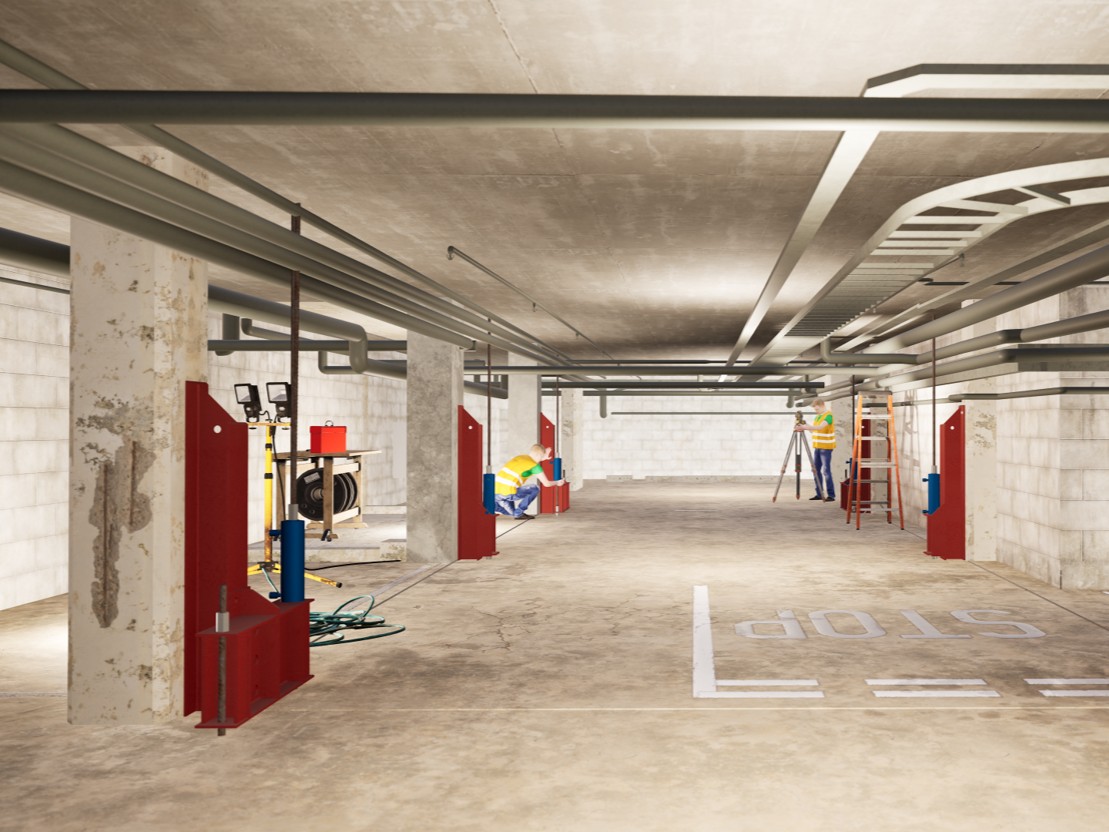
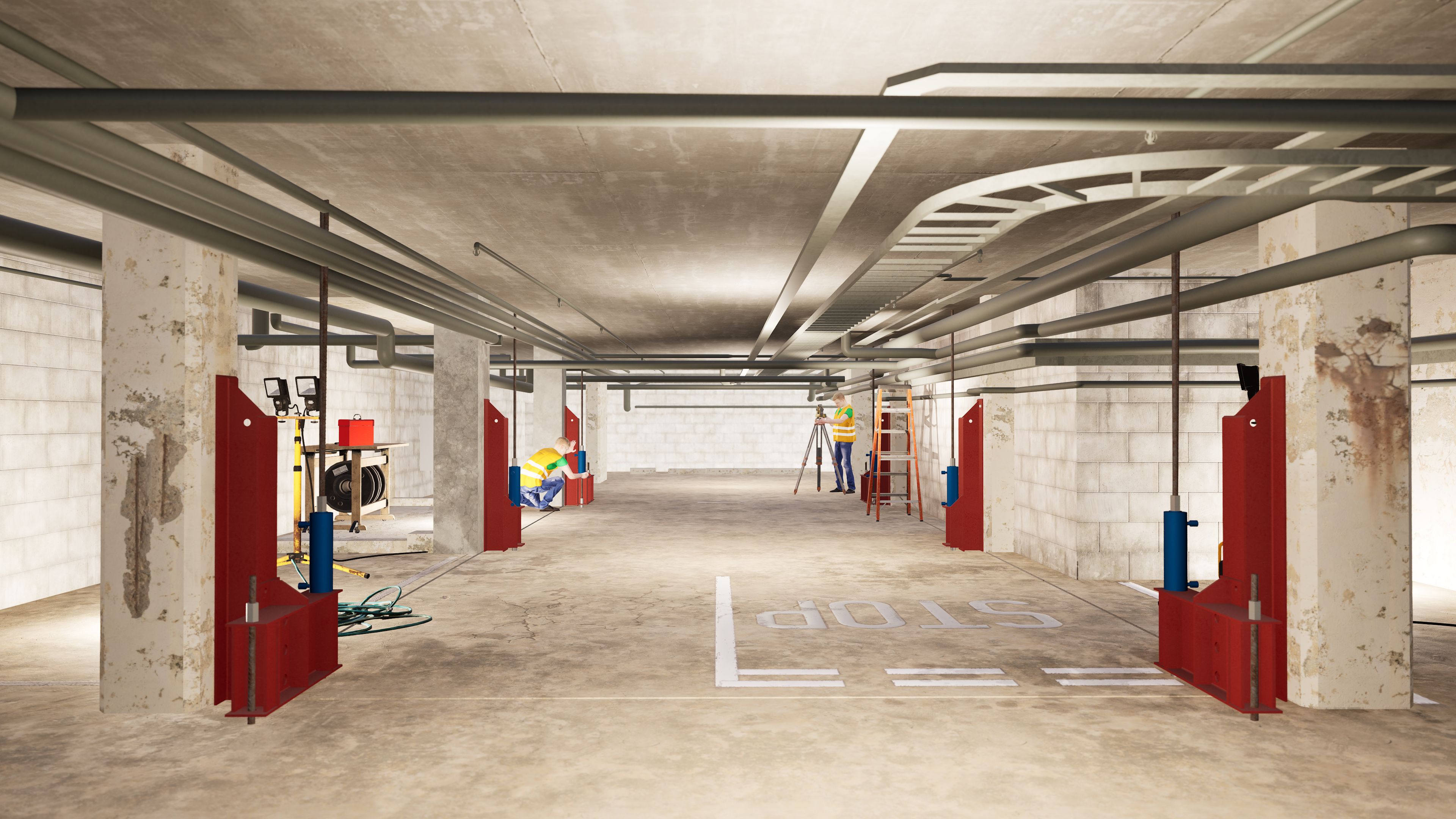
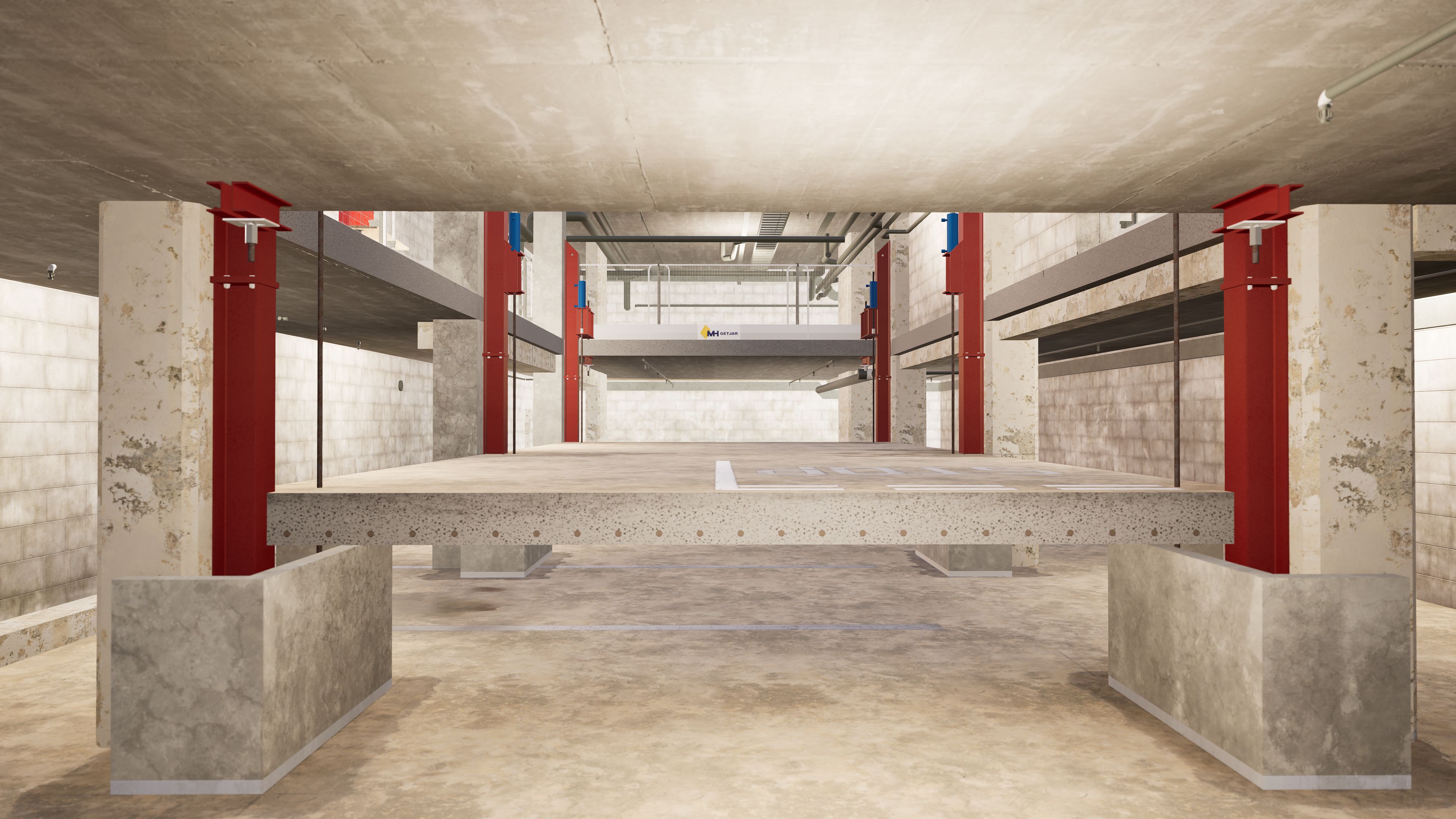
The slab needed to be cut free from the surrounding structure, supported at all times, lowered in a controlled manner and landed accurately in its final position. The methodology also needed to accommodate future phases of work, existing services and varying structural conditions throughout the basement.
Cambell Brown Engineers was appointed to develop the construction engineering and temporary works strategy that would make the concept viable.
Through detailed sequencing studies and temporary works design, a modular slab-lowering system was developed using hydraulic jacking equipment, temporary steel support structures and bespoke support arrangements. The methodology was designed not only for the trial area but also as a repeatable solution that could be applied across the wider project.
The result was a buildable strategy that transformed an ambitious structural concept into a practical construction operation.
Carbon, Disruption and the Value of Retention
The benefits of structural retention extended beyond the embodied carbon savings associated with preserving the existing slab.
The Brunswick Centre remained a live mixed-use development throughout the works, with retail, restaurant and residential uses continuing to operate. A conventional demolition and reconstruction approach would have generated significantly greater levels of noise, dust, vibration and material movements.
By retaining and lowering the slab, the project team was able to reduce much of this disruption while achieving the same permanent works objective.
The project demonstrates that sustainability is not only about materials and operational performance. Construction methodology can also play a significant role in reducing environmental impact and improving outcomes for building owners, occupants and neighbouring businesses.
The methodology was successfully implemented on site by Getjar Special Projects, who undertook the cutting, jacking and lowering works within the constraints of the occupied development.
Looking Forward
As the construction industry continues to focus on embodied carbon reduction and adaptive reuse, existing structures will increasingly be viewed as assets rather than obstacles.
The Brunswick Centre project shows that retaining and modifying structures can often deliver significant environmental and operational benefits. It also demonstrates the importance of considering buildability early in the design process.
Sometimes the most sustainable solution is not to demolish and rebuild, but to find a way to work with the structure that already exists.