Stabilising and Recovering Damaged Buildings
Recovering Compromised Structures: Bringing Buildings Back from the Brink
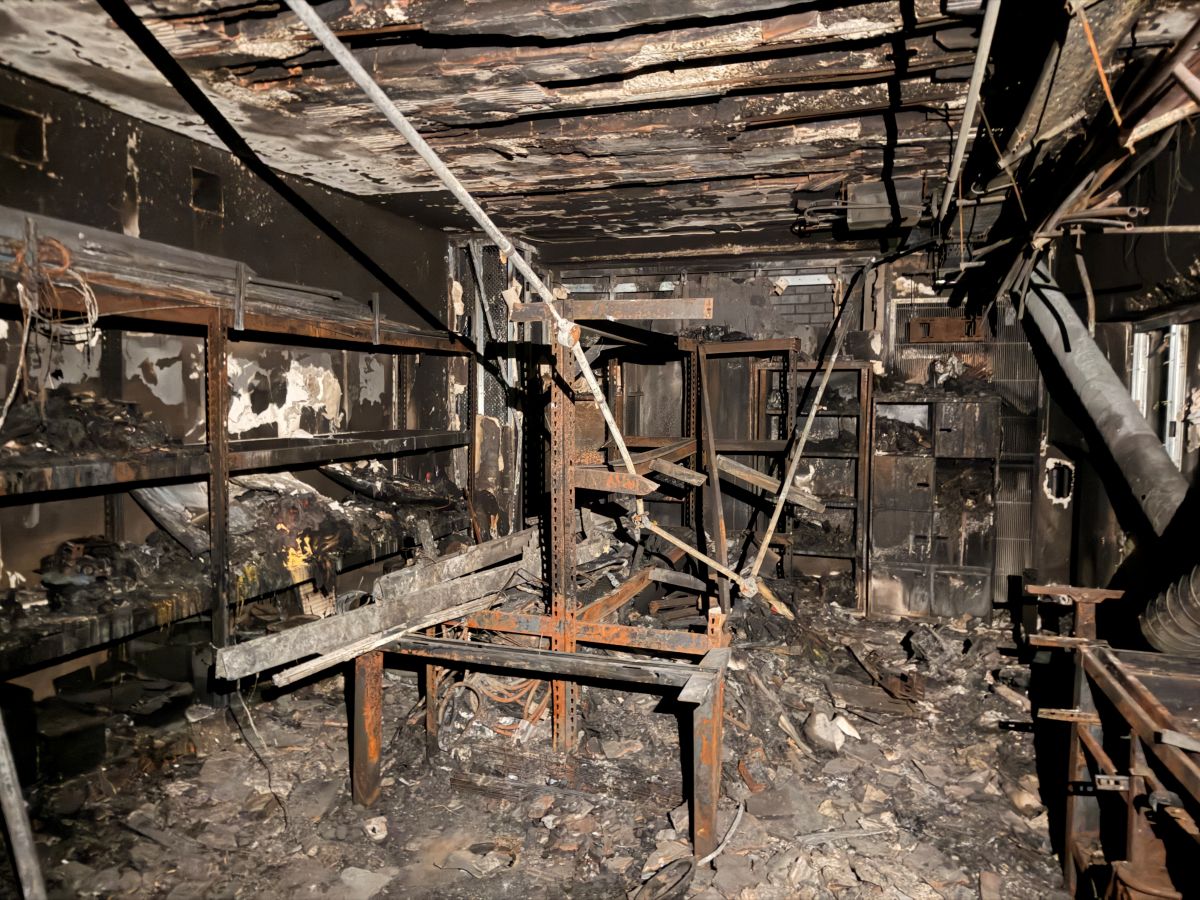
When people think of structural failures, they often picture dramatic events: a fire-damaged building, a collapsed roof, or a vehicle impact causing significant damage.
In reality, many of the most challenging situations arise more gradually. A contractor becomes insolvent halfway through a project, leaving a structure partially completed and temporary works removed. Alterations are carried out without fully understanding the existing building. Years of deterioration finally reach a critical point. A severe storm exposes weaknesses that had previously gone unnoticed. A fire, flood, or accidental impact leaves uncertainty about the residual strength of the structure.
Whatever the cause, the result is often the same: uncertainty, risk, and an urgent need for clear engineering advice.
At CBE, we specialise in assessing, stabilising, and recovering compromised structures, helping clients move from uncertainty to a clear and practical way forward.
Protecting People First
The first priority is always the safety of people.
This may involve establishing an exclusion zone around the affected building, restricting access, and arranging evacuations where necessary. These immediate measures are essential to protect occupants, site personnel, neighbouring properties, and members of the public.
At this stage, the building and surrounding area must be secured and managed in a controlled way. In many cases, the site needs to be formally established as a construction site, with clear boundaries, controlled access, security arrangements, and appropriate health and safety management.
This provides a defined framework for managing risk, protecting the public, preventing unauthorised access, and allowing the next stages of assessment and stabilisation to proceed safely.
Securing the Site and Managing the Exclusion Zone
Once the immediate safety measures are in place, attention turns to the areas around the exclusion zone.
This may involve decanting adjacent work areas, enabling tenants, occupants, or neighbouring businesses to remove belongings, and identifying what access is required for surveyors, engineers, contractors, and emergency works teams.
The next critical question is how entry into the exclusion zone can be safely achieved. This is where structural engineering judgement and temporary works expertise become essential. Before decisions can be made about repair, demolition, or reinstatement, the structure must be made safe enough for operatives to access, inspect, and work around it.
At CBE, we are well placed to support this process because we combine structural appraisal, temporary works design, and remedial engineering within one team.
Progressive Stabilisation
Every incident is different.
In many cases, safe access cannot be achieved in a single step. Instead, entry into the exclusion zone must be managed progressively, with each stage of temporary works improving the condition of the structure and reducing the level of risk.
This may involve localised propping, shoring, bracing, temporary steelwork, debris stabilisation, controlled dismantling, or other measures designed in response to the conditions encountered on site.
On complex projects, CBE can establish a site presence to provide rapid engineering input, develop temporary works solutions as conditions evolve, and support the team as access is gradually extended.
The objective is simple: every step should make the situation safer, more stable, and more controlled.
Investigation and Remedial Planning
Once the exclusion zone has been stabilised for operatives, detailed structural investigations and planning for remedial works can begin.
A structured programme of inspections, investigations, and testing is often required to understand how the structure is behaving and what level of intervention is necessary.
This process may include:
- Detailed structural surveys
- Opening-up works
- Material testing
- Structural monitoring
- Load path assessments
- Review of historic information and construction records
- Assessment of retained, damaged, or partially completed structural elements
The goal is not simply to identify damage. It is to understand what can be retained, what requires intervention, and how the structure can safely move forward.
From Emergency Measures to Permanent Solutions
A compromised structure does not always need to be demolished.
Careful assessment often identifies opportunities to retain significant parts of the existing building, provided that the correct temporary works, investigations, and remedial designs are put in place.
Permanent solutions may include strengthening works, localised repairs, replacement of damaged members, revised load paths, partial reconstruction, or sequenced demolition and rebuilding where required.
The key is to develop a solution that is safe, practical, efficient, and appropriate to the condition of the structure.
Returning Buildings to Safe, Workable Conditions
Recovering a compromised structure requires more than a single inspection or report.
It requires a clear process: protect people, secure the site, improve stability for site operations, investigate the structure, plan the works, and deliver practical remedial solutions.
At CBE, we help clients navigate these challenges by combining rapid assessment, practical engineering judgement, temporary works expertise, and remedial design capability.
Our role is simple: protect people, improve stability, support safe site operations, investigate the structure, and provide the engineering solutions needed to return buildings to safe, workable conditions.